Picture a busy afternoon where emails pile up, kids need attention, and dinner thoughts creep in early. Your shoulders tighten, and that familiar knot forms in your chest. It’s in these moments that a simple breath can become your gentle anchor, pulling you back to the present without any fuss.
I’ve shared this with neighbors over tea, and it always surprises them how something so natural can ease the day’s weight. This routine uses four settling steps you can try right away, fitting into pauses like waiting for the kettle or before stepping out the door. No apps or timers needed—just your own rhythm.
Start small today. Breathe.
Why Breath Becomes Your Quiet Anchor
Breath is always there, steady and close, like a trusted friend waiting in the next room. When stress rises, it quickens and shallows, signaling your body to stay on alert. A mindful pause lets it soften, settling your nervous system bit by bit.
Think of washing dishes after lunch, hands in warm water, mind racing to tomorrow’s list. Noticing your breath there—its quiet in and out—eases the rush. Your heart slows, muscles loosen, and clarity seeps in without effort.
This isn’t about control; it’s about return. Your body knows how to unwind when given space. Over time, these pauses build a calm that carries through the day.
Anyone can access this, anytime. It’s as simple as that neighborly chat reminding you to sip your tea slowly.
Finding a Soft Space to Begin
Choose a spot that feels supportive—a kitchen chair with sunlight nearby, a patch of soft rug, or even a park bench on a mild day. Let your back rest easy against something steady, feet flat if seated.
Mornings work well when the house is still, or evenings as light fades. Just two minutes suffices at first.
No cushions or scents required. Your space is ready.
The Heart of the Routine: Four Settling Steps
This core practice unfolds in four gentle steps, like easing into a warm blanket. Sit or stand comfortably, hands soft in your lap. We’ll move slowly, with kindness at every turn.
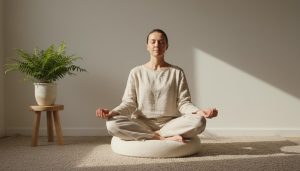
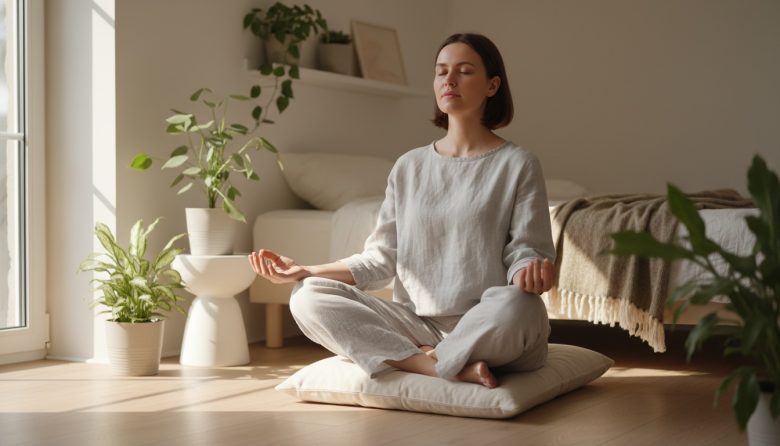
- Settle into stillness. Let your spine lengthen naturally, as if a string gently pulls the top of your head upward. Soften your gaze or close your eyes lightly—no straining. Feel your body supported by the chair or earth beneath you, releasing any held tension in your jaw or brow.
- Notice the natural flow. Bring awareness to your breath as it is now, without changing it. Feel the cool air entering your nostrils, the gentle rise of your belly or chest, then the warm release outward. It’s like watching leaves drift on a quiet stream—no need to steer.
- Lengthen with kindness. If it feels right, count softly: inhale for four, hold for four, exhale for four. Keep it light; shorten if your mind pulls away. Imagine each breath smoothing ripples in a pond, fostering space rather than force.
- Release and return. Let your breath resume its own pace. Open your eyes slowly, carrying the calm into your next step. Notice how the room feels a touch softer now.
Try this full cycle once or twice daily. For an everyday example, pause during your afternoon tea break: settle by the window, follow the steps, then sip with fresh ease. It takes under five minutes but lingers.
Short practice tips: If outdoors, lean against a tree for that extra ground. In a crowd, do it eyes-open, focusing on one point ahead. Always end with a small smile to yourself.
This routine supports without overwhelming. You’ll find it fits like an old, comfortable sweater.
Layering Breath into Daily Moments
Weave these breaths into waiting lines at the market or traffic lights, turning idle time into quiet recharge. Before bed, pair it with settling thoughts for deeper rest—much like when considering how to set up relaxing evening bath rituals, where breath enhances the unwind.
Here’s a small checklist for easy spots:
- Morning: After brushing teeth, before coffee.
- Midday: During lunch break, eyes on a window.
- Evening: Reclined on the sofa, lights dim.
Be kind if you miss a moment; tomorrow offers another. This layering builds steady calm, like roots deepening in soft soil.
Gentle Adjustments for Your Flow
Adapt as needed—try seated for focus or walking breath during a short stroll around the block. For busier days, shorten to two steps: notice and release. No perfection here; let it match your energy.
During a neighborhood walk, sync steps with inhales and exhales, shoulders easing with each one. This keeps the practice alive without rigidity. If mornings suit better, link it to your balanced day routine for steady energy levels, starting steady.
Listening to your body ensures it feels supportive. Walking breath suits those who fidget sitting still, turning movement into medicine. Over days, you’ll sense what flows best.
Signs Your Breath is Softening Stress
Watch for subtle shifts: shoulders drop from your ears, breath deepens without thought, and thoughts space out like clouds parting. Your hands might warm, face soften.
Notice without judging these cues. They whisper progress.
Trust the quiet changes.
A Few Kind Reminders Along the Way
If your mind wanders—and it will—gently guide it back, like calling a curious puppy home. Consistency eases in naturally, not as a task but a kind habit.
Try one breath right now, wherever you sit. Pair longer sessions with gentle movement, such as a cozy home yoga routine for gentle flexibility, to deepen the calm.
Patience blooms the real relief. Be tender with yourself.
Common Questions on Breathing with Ease
Can I do this if I’m new to mindfulness?
Yes, this routine welcomes beginners with open arms. It uses your natural breath, so start with just one minute in a familiar spot like your kitchen chair. Over a few tries, the steps will feel like old friends, easing you in without pressure.
What if my mind wanders during the steps?
Wandering thoughts are completely normal, even for those who’ve practiced for years. When it happens, simply note it—like “thinking”—and return to your breath with a soft smile. This gentle redirection strengthens your focus over time, turning the practice into a forgiving flow.
Is this safe for everyone?
Most people find it supportive and gentle, easing everyday stress without issue. If you feel lightheaded or uncomfortable, shorten your breaths and stop, sitting quietly instead. Always check with a doctor if you have respiratory concerns or feel unsure—your well-being comes first.
How often should I practice?
Aim for five minutes daily to nurture calm, but tune into what your day allows—even once supports you. Mornings build momentum, evenings release the day. Let it evolve with your rhythm, adding moments as they feel right.
Will I feel relief right away?
Many notice a softening right after the first try, like tension melting from tight spots. For others, it layers gently over days, revealing steadier moods. Either way, each breath plants a seed of ease—trust its quiet work.